
Going For A Walk
The ZoneGR project kicked off on Tuesday May 12th; this project will draft a new land-use ordinance - commonly referred to as “Zoning” - derived from the new Community Master Plan (CMP) which the city developed from 2022 - 2024, and adopted in December of 2024. In the state of Michigan having a CMP, which must be updated every twenty years or so, is one of the key components which legally create an entity known as a “city”.
The zoning is then derived from the principles and goals as laid out in the CMP. While it can seem tedious and bureaucratic, both the CMP and the zoning ordinance are instrumental in shaping how the city may, and may not, evolve, adapt [or not], and develop [or not] for the next twenty-year cycle. Twenty years is a long time; twenty years ago was 2006 - before the iPhone (2007), the iPad, and cryptocurrency, before the national legalization of same-sex marriage (2015). Locally, 2006 was before “Beer City USA” (2012) and before Art-Prize (2009). This means it is extremely important to have a flexible, future-oriented zoning ordinance; the ordinance will either facilitate the city's future prosperity or hobble and inhibit it.
As important as it is zoning can be challenging to discuss with neighbors. It involves a host of things which, likely, in everyday life go unconsidered or unnoticed. Zoning has defined the city for so long - quietly - much of what it dictates appears to simply be the normal, it seems the default thing that just happens [or doesn’t happen].
And people have all kinds of sentiments and ideas, often casually acquired, that influence how they perceive or imagine the spaces around them. That can seem like a challenge, but it is also an opportunity. One of the activities I led for the development of the 2024 CMP, as Connector for the CMP project and the Highland Park Neighborhood Association, was leading neighbors on a walk, only a mile around a part of the neighborhood. This was in 2023, and occasionally, a neighbor will still mention it.
As a participant in the Highland Park Neighborhood Association for the last decade, I’ve had the neighborhood explained to me many times: who lives here, how it is declining or how it is gentrifying, how it should change, and how it should not change. These explanations are often partially true, but oversimplified. A neighbor’s perception of a neighborhood can often relate a very small sliver of a neighborhood, perhaps not extending much further than their own block.
The advantage of going for a walk is that you and your neighbors can all look at what is in front of them, better than the generalities that usually end up being debated in meetings. The discoveries that can be made by intentionally looking, even within a single neighborhood, readily inspire conversations
I recommend trying to come up with a fairly level route - which can be challenging in some parts of Grand Rapids - and identify some of the most interesting features in case the conversation lulls. Most likely neighbors will begin to notice things on their own.
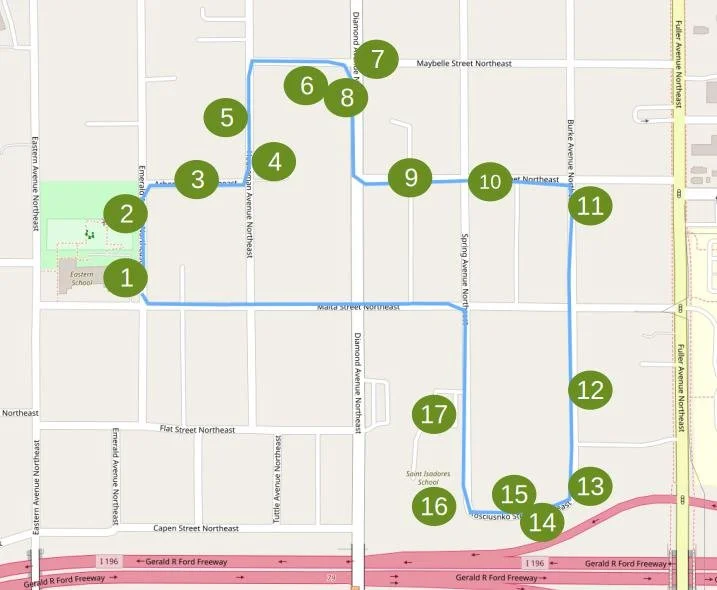
When people walk around a neighborhood and deliberately look, they will see all kinds of things they were unaware of and may come to appreciate them more.
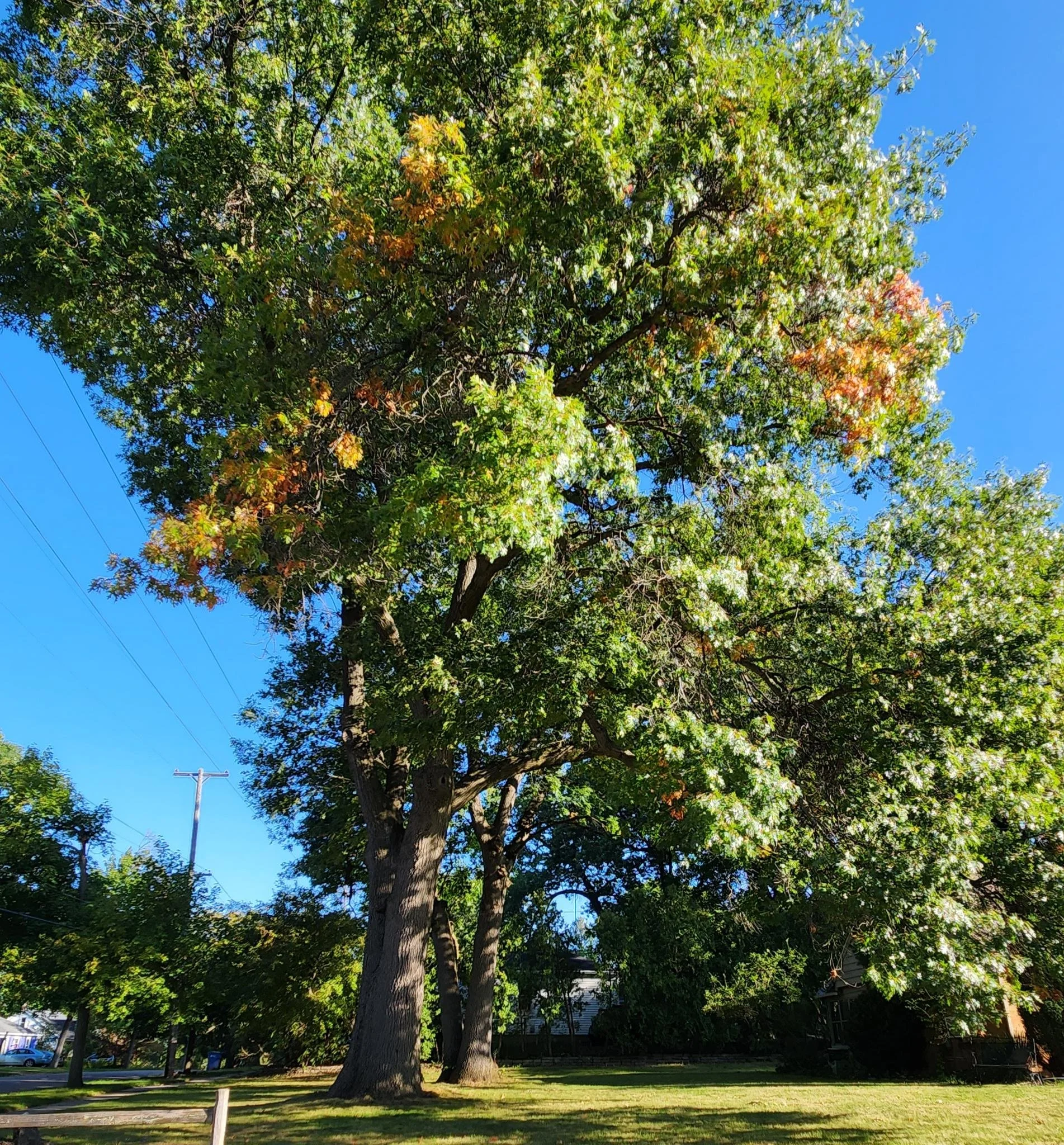
In terms of appreciation, one of those things people commented on frequently during the walk was the trees. Highland Park came into existence as a neighborhood somewhere around a hundred years ago, which is the sweet spot in the timeline for great mature trees. It also means we are beginning to lose some of our majestic giants, as the lifespan of these trees is in the range of 100 to 150 years. It is important to neighbors that we both attempt to preserve these trees while we can [which will not be forever], and that we plant new trees and protect younger trees so they become the next generation's giants.
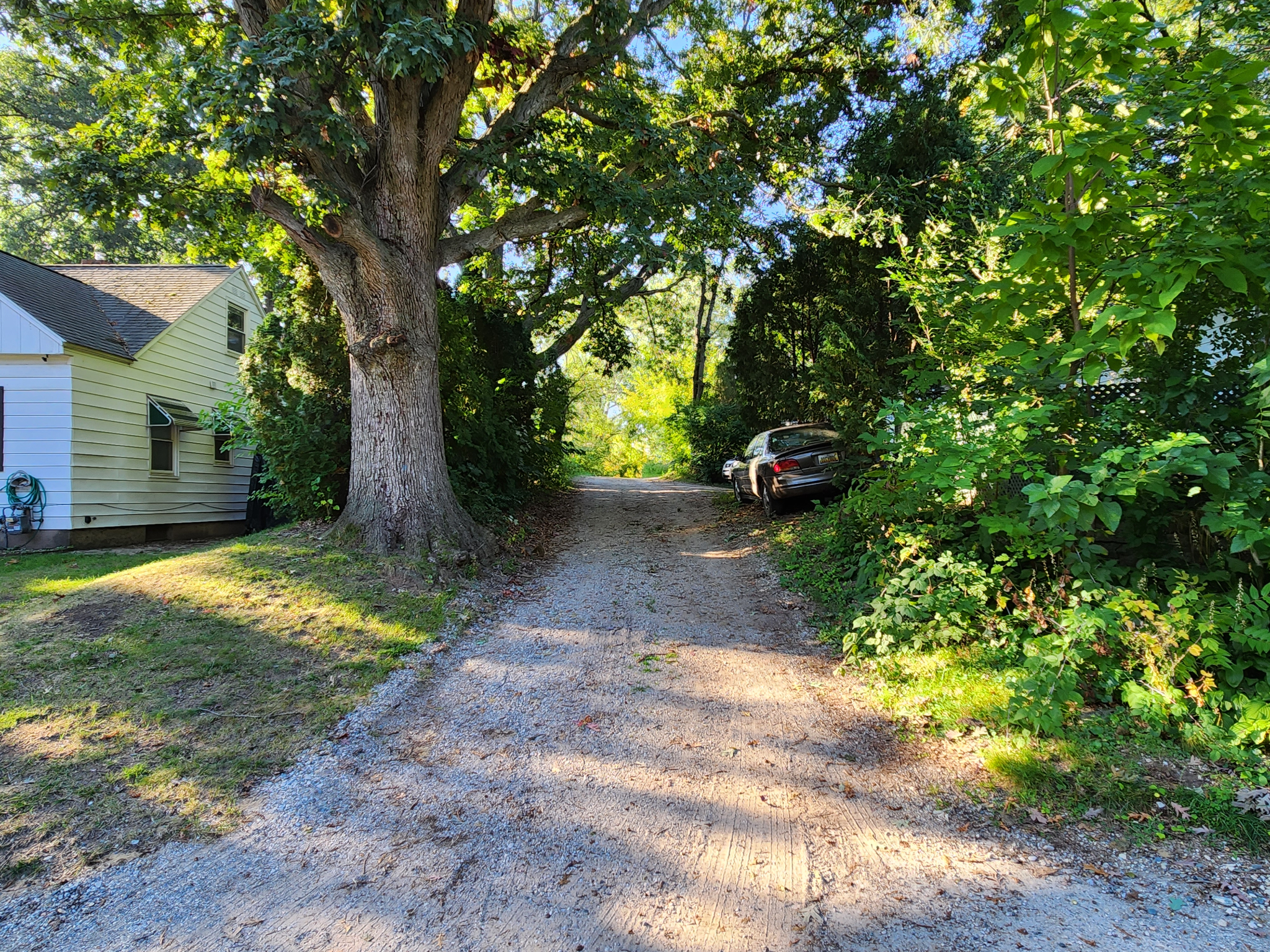
Related to the trees was an appreciation for the alleys, many of them fairly unmaintained, in the neighborhood. These alleys create the feel of a backcountry road; they are often cooler in the summer than the asphalt streets. When I was child most adults seemed to dread alleys, and us younglings were advised - to no avail - to avoid them. It seems my generation's attitude toward alleys has persevered!
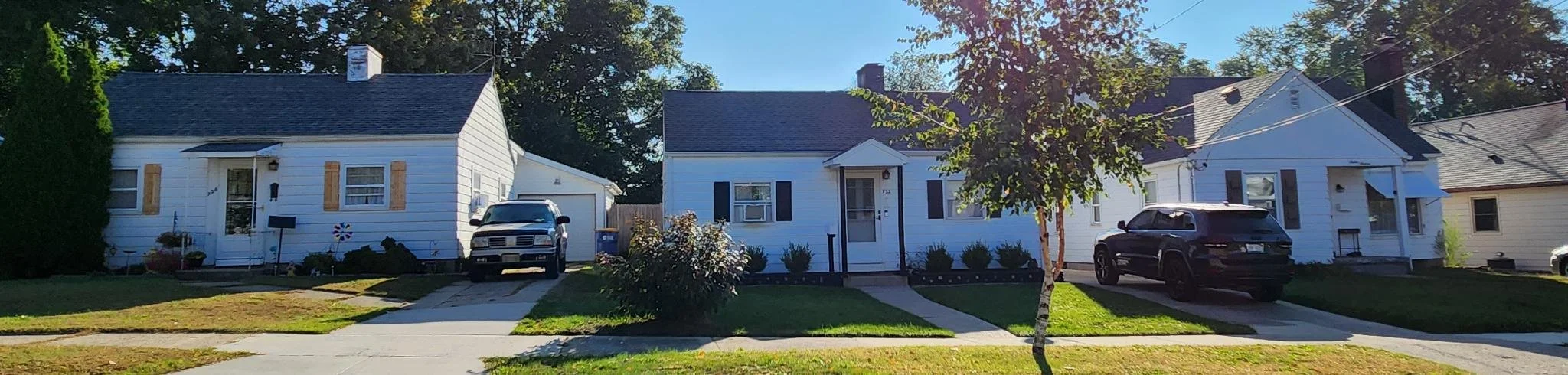
On the surprise side of the conversation was a recognition of the diversity of building types. Anyone involved in neighborhood organizing and activism has probably been told “this is a neighborhood of single-family homes” so often that a dollar-to-comment conversion would keep them happily eating avocado toast for the rest of their lives. And it is true … ish, there are a lot of single-family homes. Particularly, Highland Park has an abundance of the smaller “salt box” GI Bill homes due to when in time the neighborhood pushed east from its previous boundary.
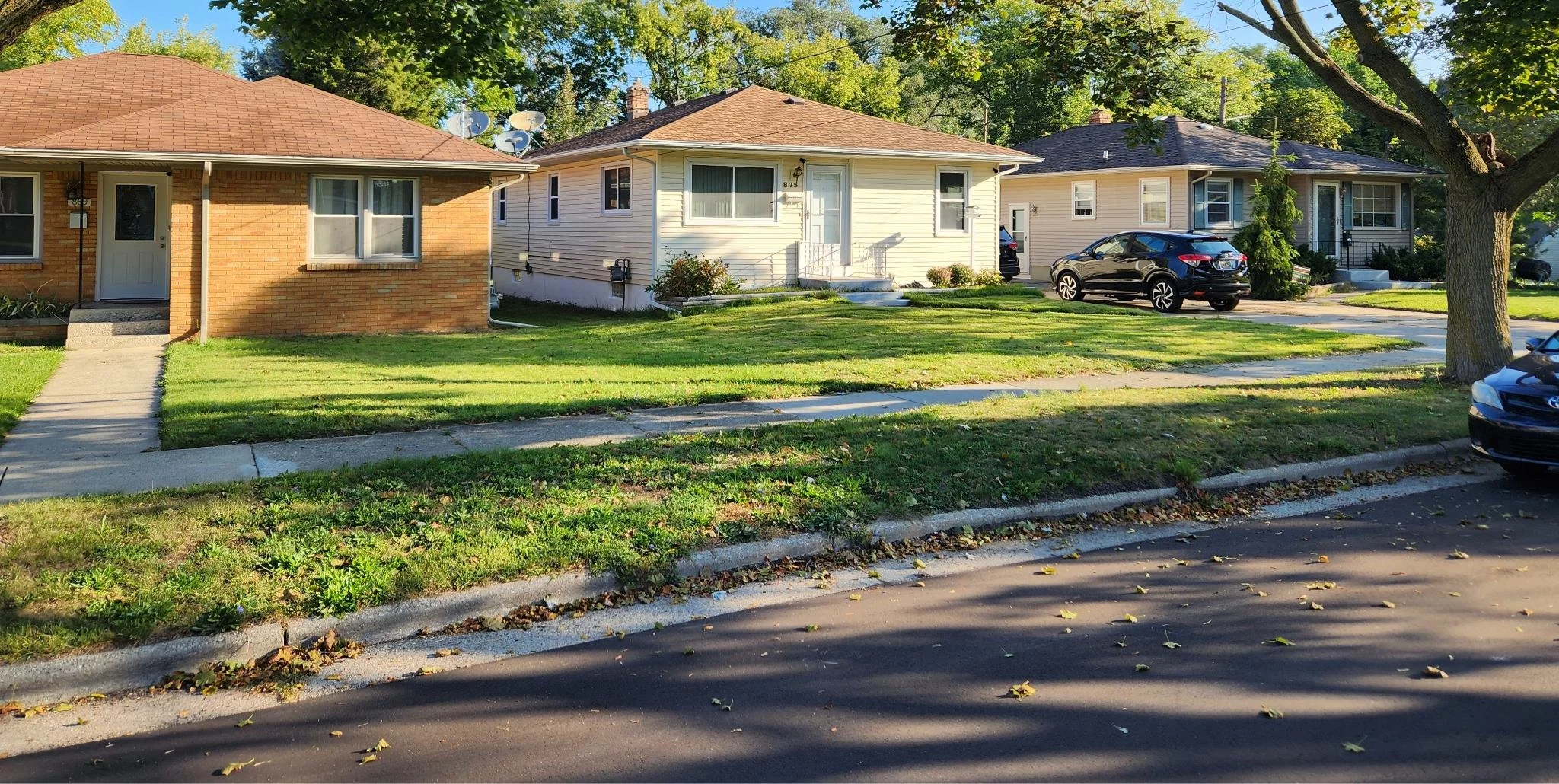
One of the most memorable remarks of surprise was for this mid-rise building, which someone who lived only a block away was unaware existed:
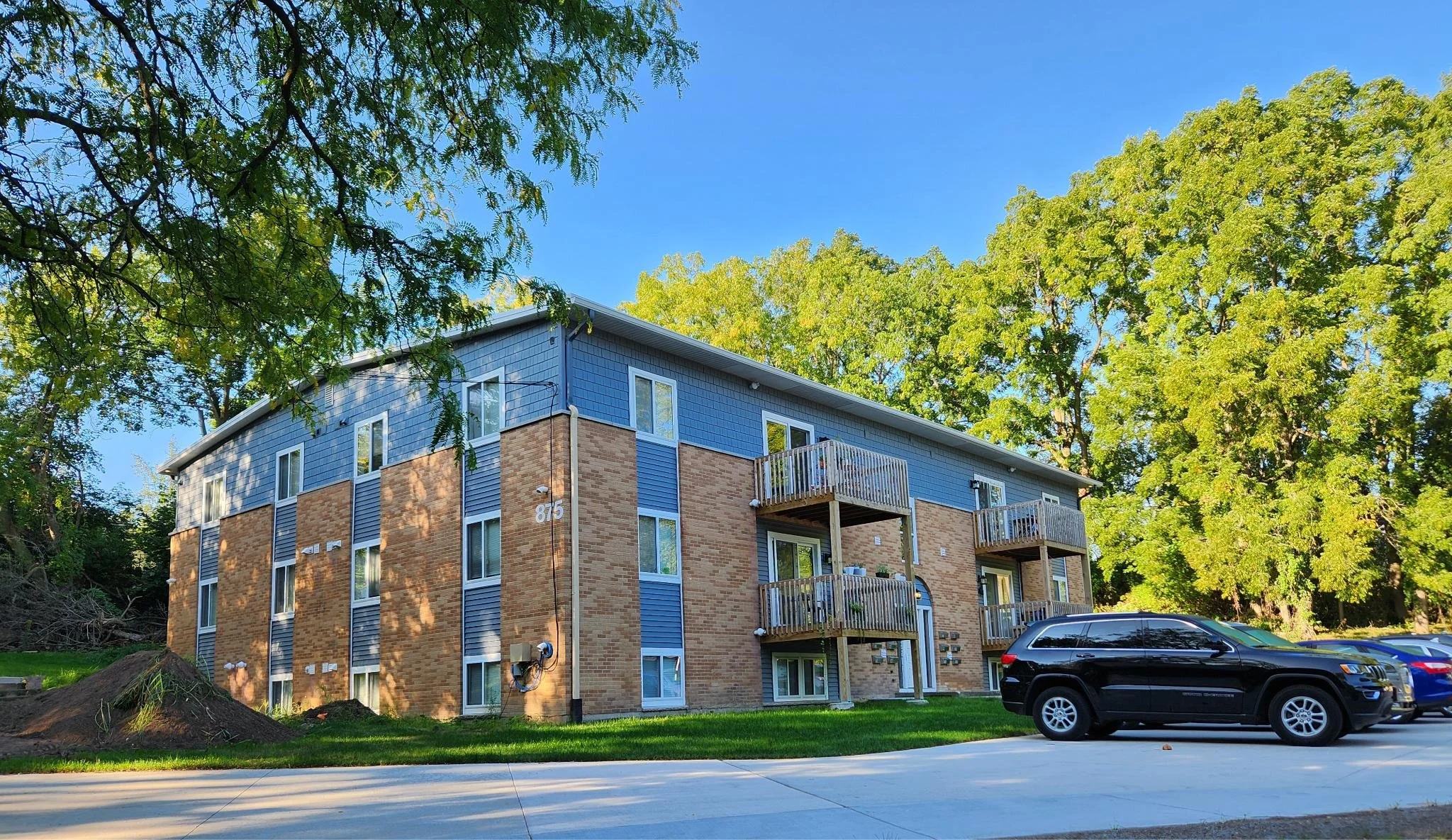
Recently renovated, this apartment building has been in this location for decades.
And some not single-family homes are stealthy. Until people are prompted to count mailboxes or doors, they go completely unremarked upon:
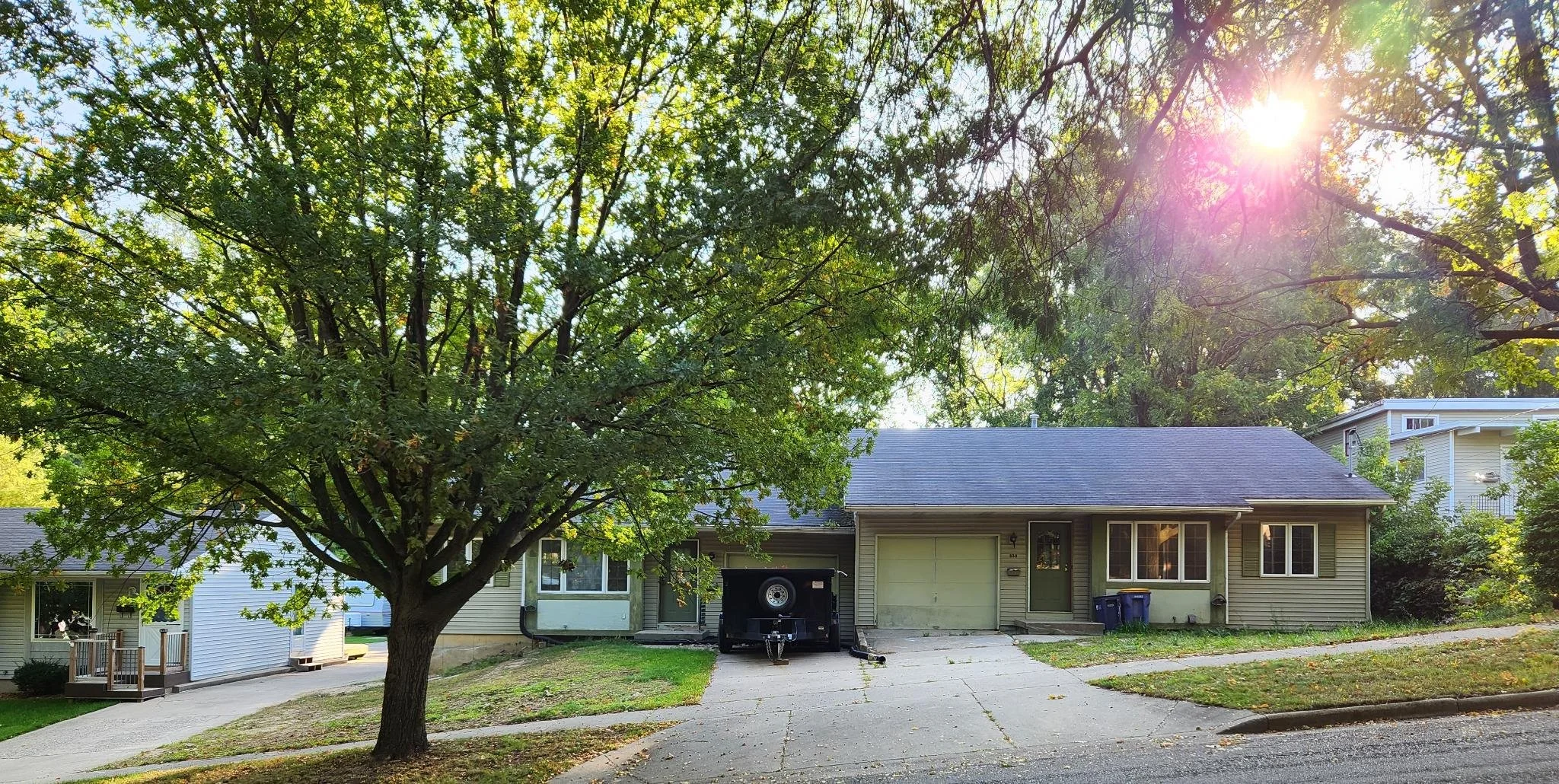
One of the features I find most fascinating is the abundance of quad-plexes. The neighborhood pushed north in the last years before the city banned small-scale affordable housing types, with many of these being constructed concurrently with the meetings at city hall, which would bring an end to the city’s growth for decades to come. The workers’s hammers at these properties were striking at the moment the hammer of city hall was swinging.
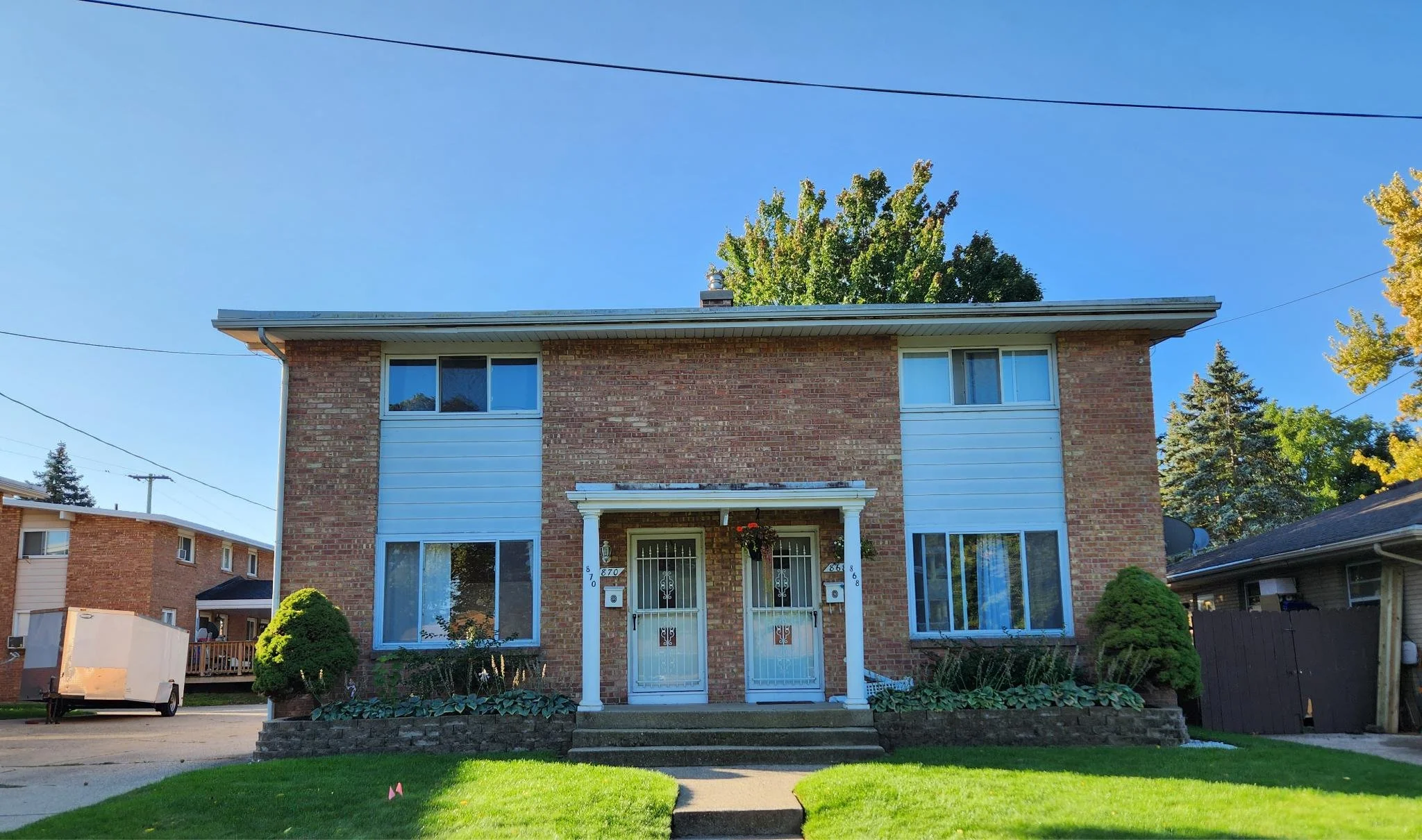
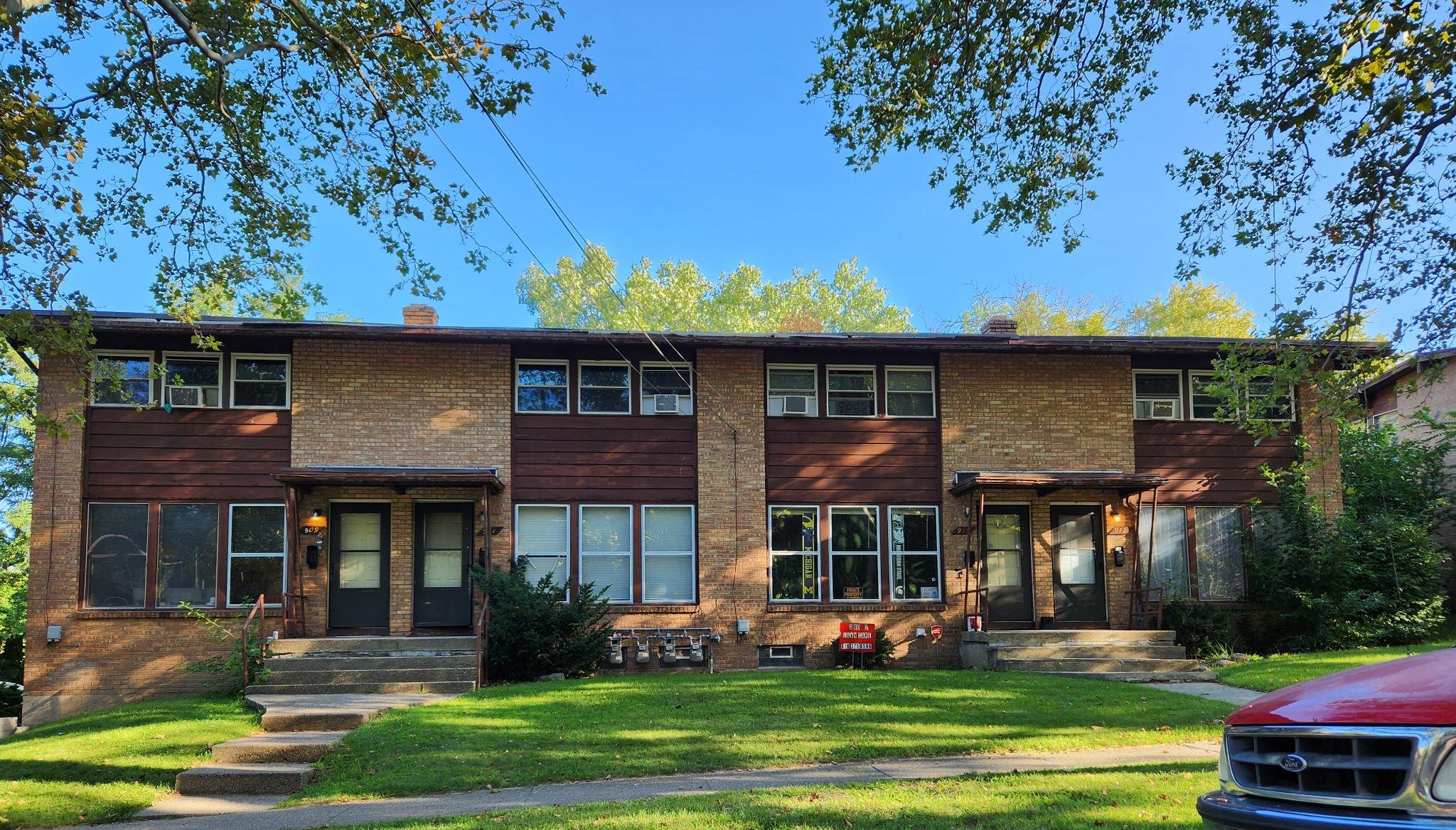
I believe that Highland Park has the largest concentration of quad-plexes of any neighborhood in Grand Rapids. I’d love to know if there is a neighborhood that can challenge us on that count.
And the biggest surprise from the walk? Highland Park has nuns! Only a couple of people on the walk knew this: that there is a neighborhood nunnery. I was able to arrange for a priest from St. Isidore’s, which was one of the last stopping points on our walk, to come out and give a brief talk about the parish's and the neighborhood's history. The parish is nearly as old as the neighborhood [which began as “The Montgomery Subdivision” around the turn of the previous century].
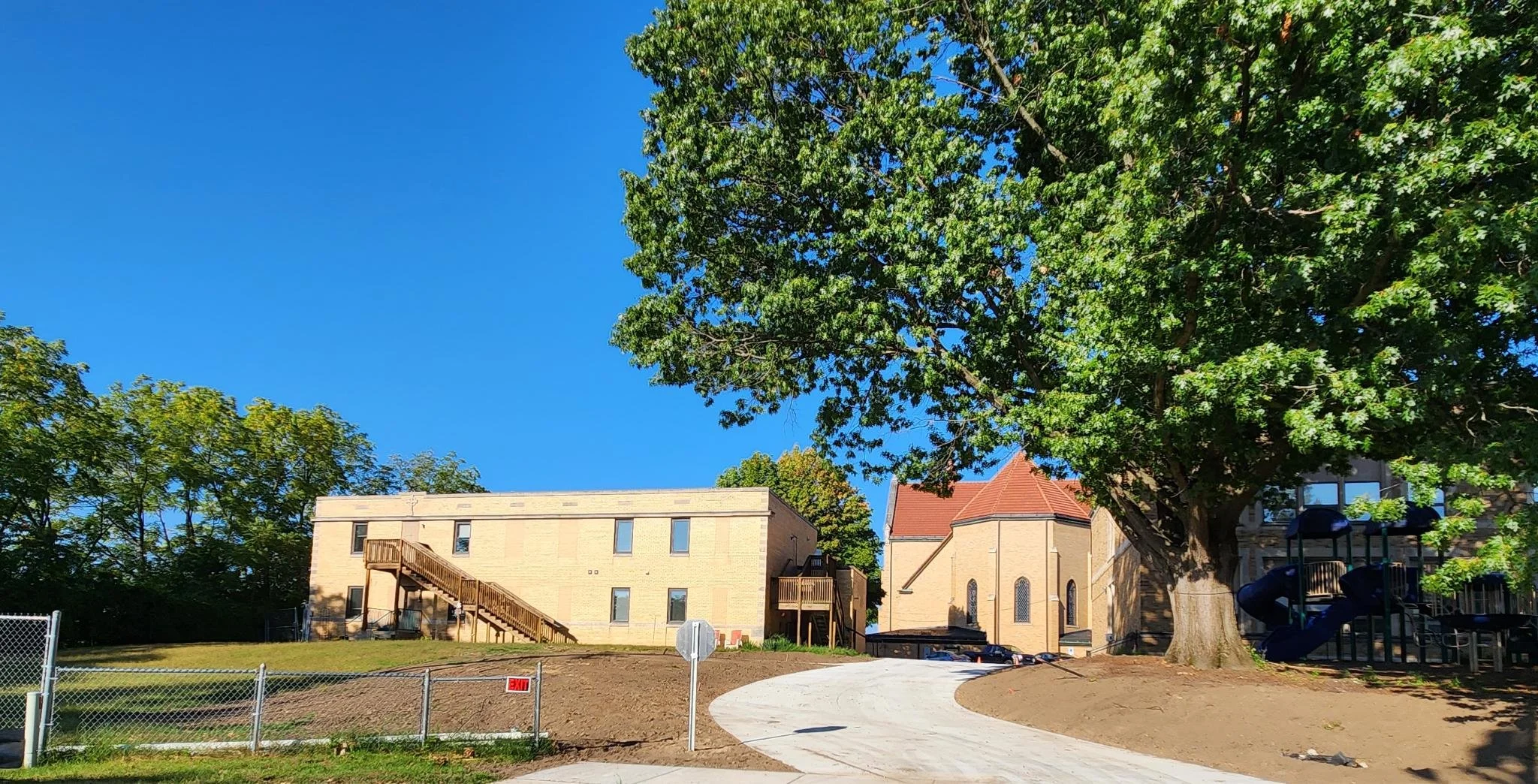
Also, looping back to the beginning, just as this walk did: the parish property has some great trees.
If you want to organize an activity in your neighborhood and to get people talking to each other - even if you think your neighborhood is unremarkable - I suggest looking closely and taking a walk. There is more there than you might first imagine.
Adam Williams, Director of Policy